
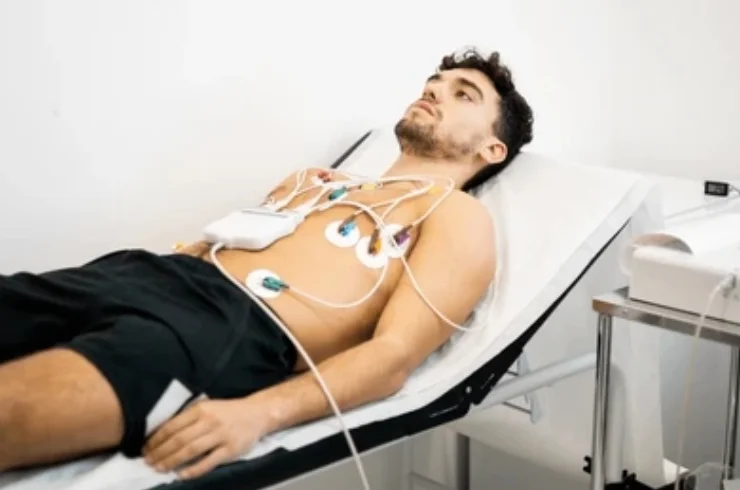
An Electrocardiogram (ECG or EKG) is a simple, quick, and painless test that measures the electrical activity of your heart. Each heartbeat produces electrical signals, and an ECG records these signals to show how well your heart is working.
By analyzing the ECG tracing, doctors can detect irregularities in your heart rhythm, rate, and structure — making it one of the most common and valuable cardiac diagnostic tests.
Why is an ECG Done?
Your doctor may recommend an ECG test to:
- Evaluate chest pain, shortness of breath, or dizziness
- Detect irregular heartbeats (arrhythmias)
- Diagnose heart attack or damage
- Monitor the effects of heart medications or pacemakers
- Check your heart’s health before surgery or physical activity
An ECG can reveal both acute and chronic heart conditions, making it a key part of any cardiac evaluation.
How is the ECG Test Done?
The ECG test is quick — it usually takes 5 to 10 minutes.
- You’ll be asked to lie down and relax.
- Small electrodes are placed on your chest, arms, and legs.
- These electrodes detect your heart’s electrical signals and record them on paper or a screen.
- The results are reviewed instantly by a cardiologist to identify any abnormalities.
The procedure is completely safe, non-invasive, and causes no discomfort.
Types of ECG Tests
Depending on your condition, your doctor may recommend:
- Resting ECG – Performed while you are lying still.
- Ambulatory ECG (Holter Monitor) – A small portable device records your heart activity over 24–48 hours.
- Stress ECG – Done while you exercise on a treadmill to see how your heart performs under stress.
Benefits of an ECG Test
- Fast and accurate heart assessment
- Detects silent or early-stage heart problems
- Helps prevent major cardiac events
- Non-invasive, safe, and affordable
- Can be repeated anytime for monitoring
When Should You Get an ECG?
Consult your cardiologist if you experience:
- Chest pain or tightness
- Irregular or fast heartbeat
- Dizziness or fainting spells
- Unexplained tiredness
- Family history of heart disease
Early detection through ECG can help you take control of your heart health before problems become serious.
Conclusion
The ECG test is a vital, first-line tool in heart care — offering a quick look into how your heart is functioning. Whether for routine screening or specific symptoms, an ECG helps doctors diagnose, monitor, and protect your heart effectively.