
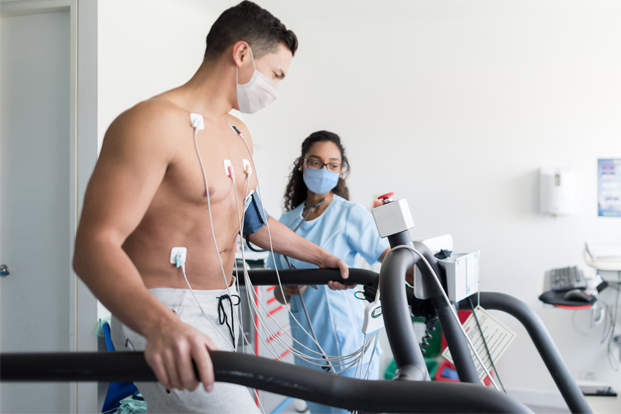
A Treadmill Test (TMT), also known as a Cardiac Stress Test, is a diagnostic test that evaluates how well your heart responds to physical activity. During the test, you walk or run on a treadmill while your heart rate, blood pressure, and ECG (electrocardiogram) are continuously monitored.
This helps doctors determine how efficiently your heart pumps blood and whether it receives enough oxygen during exercise or stress.
Why is a TMT Test Done?
A TMT test helps your cardiologist:
- Detect coronary artery disease (CAD) or blocked arteries
- Evaluate chest pain, breathlessness, or fatigue on exertion
- Monitor heart rhythm abnormalities during exercise
- Assess the effectiveness of heart treatments or medications
- Determine your fitness level before surgery or a cardiac rehabilitation program
How the TMT Test Works
The test begins with you walking on a treadmill at a slow speed.
Gradually, both the speed and incline increase in stages (every 3 minutes), making your heart work harder. Throughout the test, your ECG, blood pressure, and symptoms are recorded.
The goal is to reach a target heart rate based on your age and health. Once this level is achieved or if you develop any discomfort, the test is stopped and your heart is monitored during recovery.
Preparation for the TMT Test
To ensure accurate results, follow these simple steps:
- Avoid eating a heavy meal 2–3 hours before the test
- Wear comfortable clothes and walking shoes
- Inform your doctor about all medications you are taking
- Avoid caffeine or smoking before the test
- If you have diabetes or hypertension, follow your physician’s instructions carefully
Is the TMT Test Safe?
Yes, the TMT test is generally safe and well-tolerated. It is conducted under the supervision of trained cardiologists and technicians who monitor your heart’s response in real-time.
If any abnormality or discomfort arises, the test is stopped immediately.
Benefits of the TMT Test
- Detects early signs of heart disease
- Helps in risk assessment for heart attack
- Guides treatment and exercise recommendations
- Non-invasive and reliable
- Provides valuable insights into cardiac health and stamina
When Should You Take a TMT Test?
Your doctor may recommend a TMT if you experience:
- Chest pain or tightness on exertion
- Shortness of breath
- Irregular heartbeat
- Unexplained fatigue during physical activity
- Family history of heart disease
Conclusion
A TMT test is one of the most effective and affordable ways to evaluate your heart’s performance under stress. Regular cardiac screening — especially if you have risk factors like high blood pressure, diabetes, smoking, or obesity — can help detect issues early and prevent major heart complications.